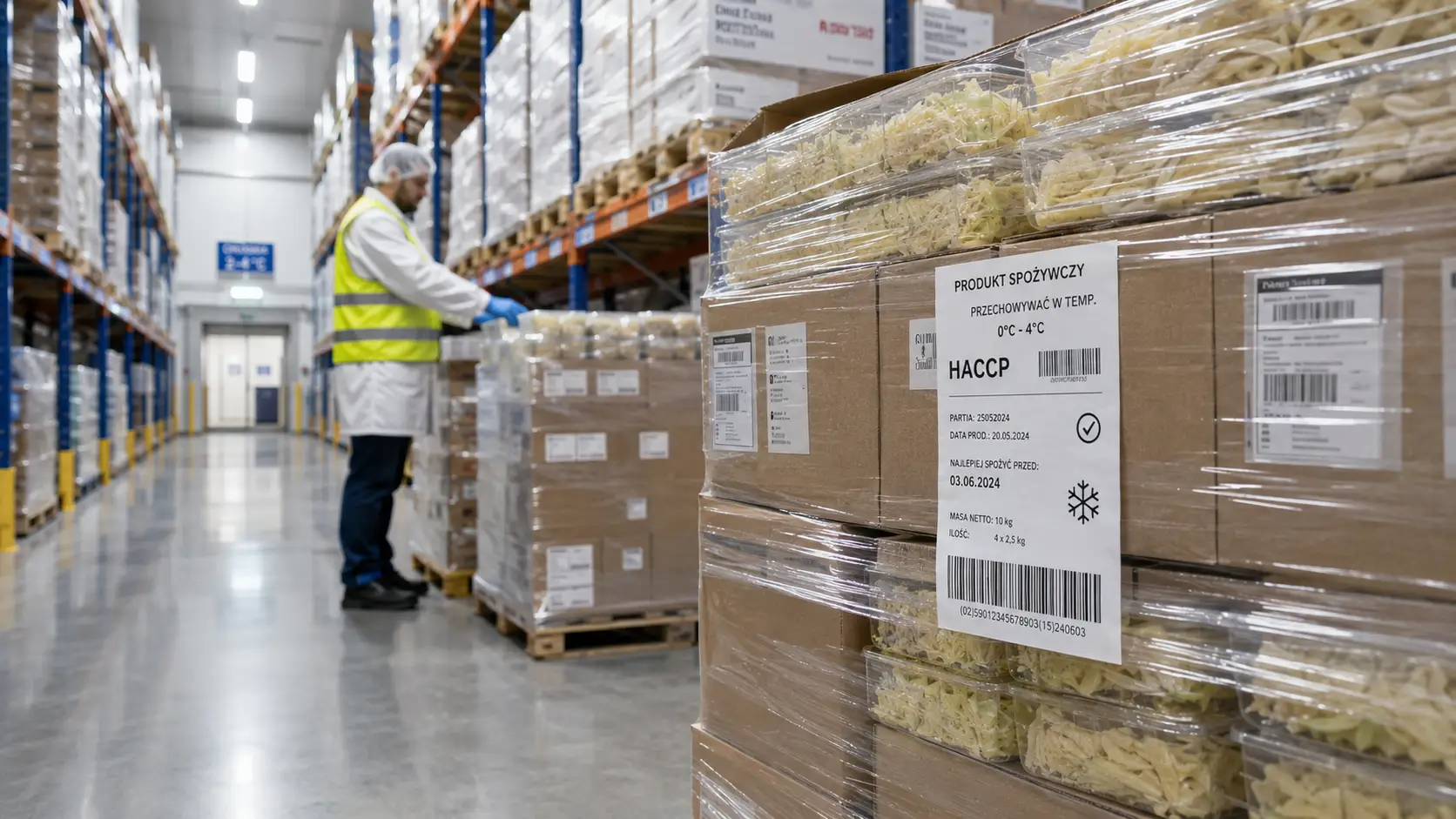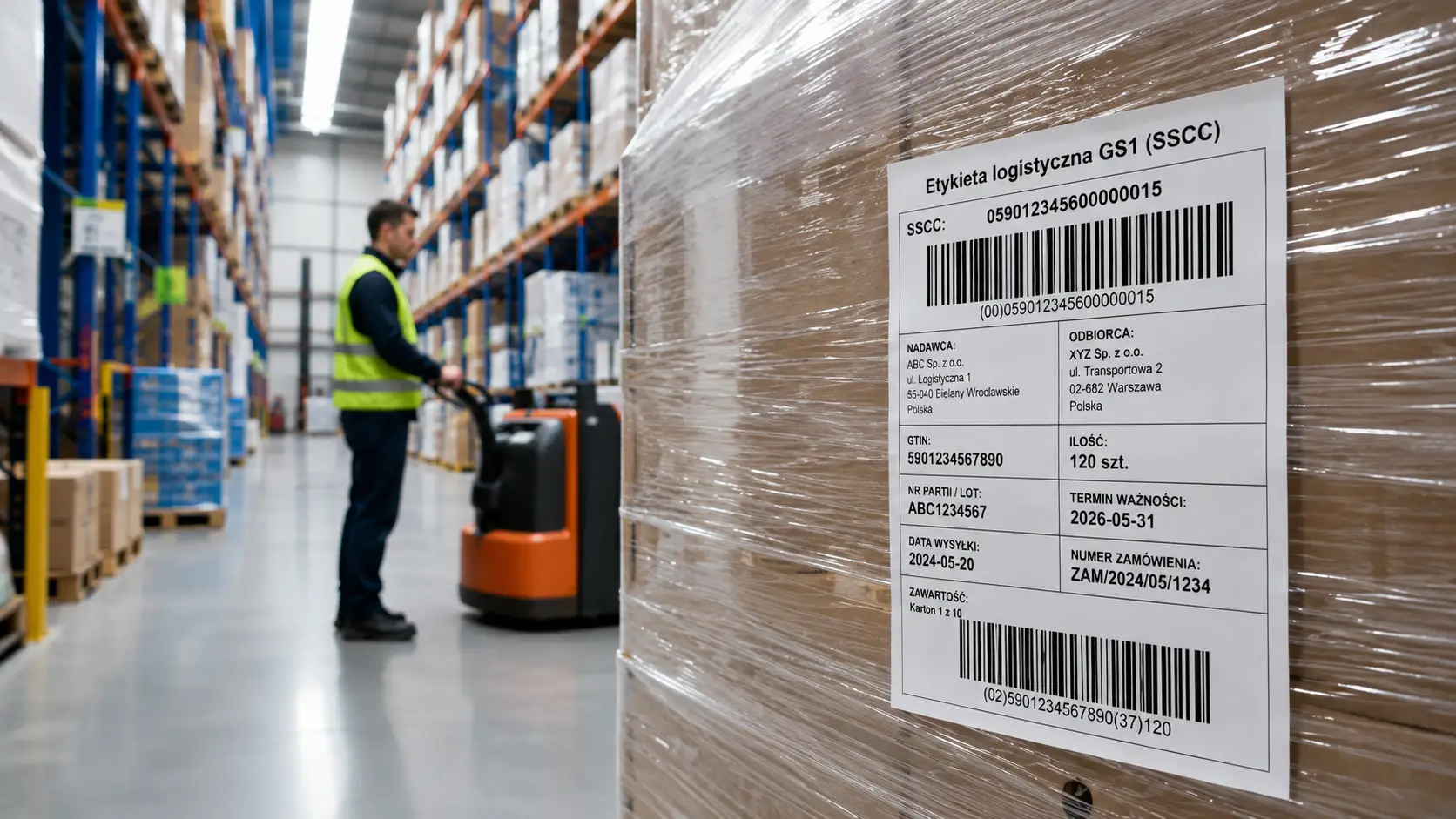

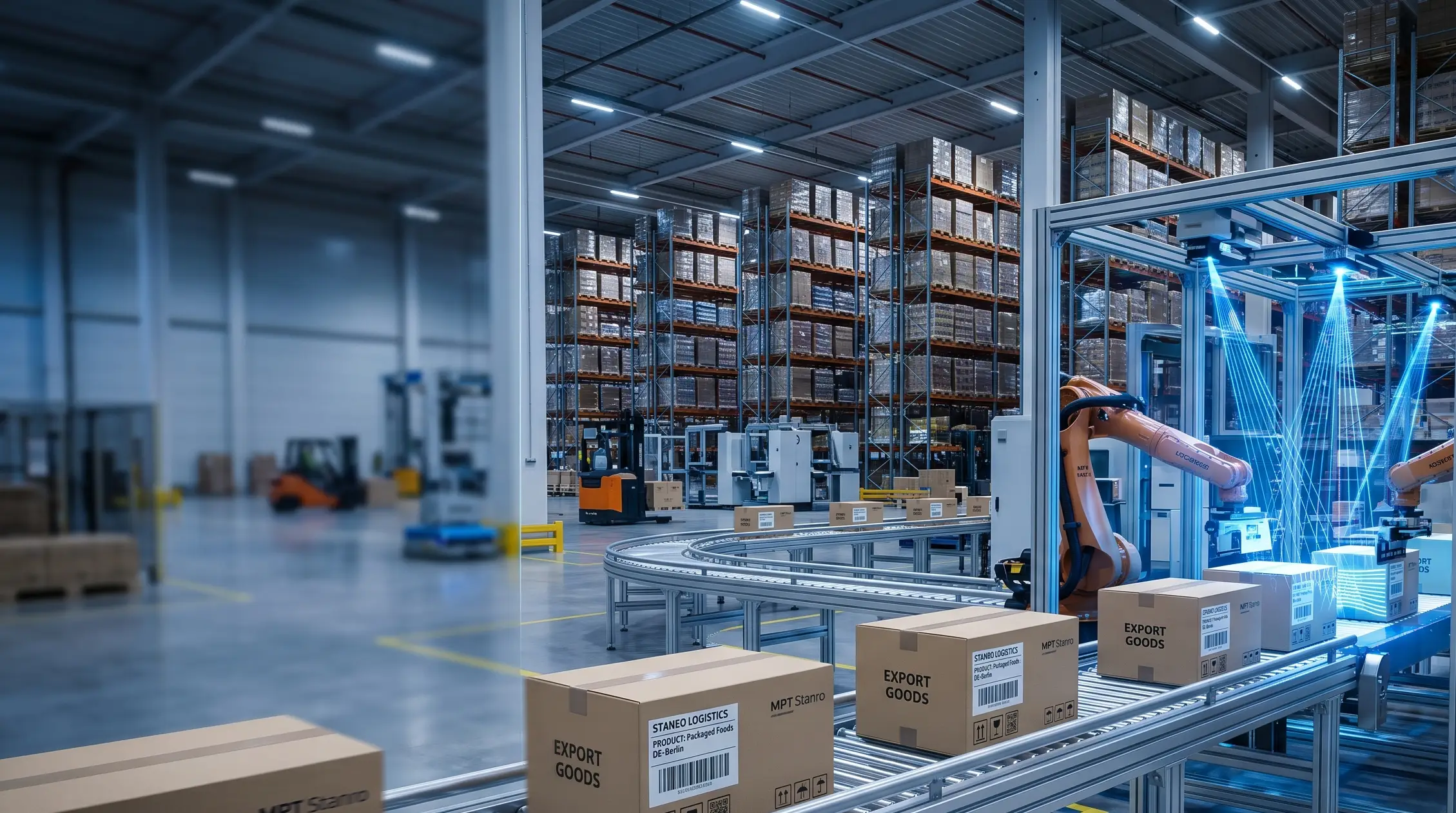
Labeling goods is the foundation of safe exports and your profits. At MPT Stanro, we have been supporting B2B partners in contract logistics for 30 years, eliminating legal errors and reducing operating expenses. With us, you can be sure that your products meet rigorous EU standards and the specific requirements of the German market.
Legal complexities in exports – Regulation 1169/2011 and GPSR
Introducing a product to a foreign market requires full compliance with EU regulations, which go beyond simple translation. Product labeling must take into account specific information requirements, distinct from those for food and industrial products. As your logistics partner, we monitor legal changes, ensuring your company's security during inspections.
In the context of Regulation 1169/2011, this concept implies the obligation to provide precise information about ingredients, nutritional values, and allergens in a transparent manner for consumers. Regulation (EU) 2023/988 (GPSR), on the other hand, is a legal act concerning the general safety of non-food products, imposing the obligation to provide instructions and warnings in the official language of the destination country.
Misinterpretation of these guidelines often results in sales being blocked and entire batches being recalled. Our verification procedures eliminate this risk during the label design phase, protecting your brand's capital and reputation.
The specificity of the German market and the LUCID system
Exporting to the German market requires a rigorous approach to local environmental and information regulations. To avoid product blockages and severe sanctions, your company must meet a number of specific formal requirements:
- Mandatory registration in the LUCID system and reporting of packaging weights.
- Use of German on every element of the product packaging.
- Appointment of a legal representative in Germany for selected product groups.
- Full compliance with the German Packaging Act Verpackungsgesetz.
German regulatory authorities strictly enforce these requirements. At MPT Stanro, we integrate these standards into the product preparation process, ensuring smooth transition through border and distribution processes without the risk of financial penalties.
Technical aspects of labeling – readability and data presentation
Accurate product labeling relies on strict technical parameters that determine product approval. Regulatory authorities, such as the Office of Competition and Consumer Protection (UOKiK) or their foreign counterparts, first verify the legibility of the print and the way allergens are highlighted. Label legibility is a technical parameter defined by the minimum font height and appropriate background contrast to the text.
| Technical parameter | Standard requirement | Small packages (area < 80 cm²) |
|---|---|---|
| Font height (x) | min. 1.2 mm | min. 0.9 mm |
| Allergen identification | A distinct style, color, or background | A distinct style, color, or background |
| Common field of vision | Name, mass, alcohol | Name, mass, alcohol |
Nutrition facts tables must be presented in tabular format, maintaining a strict order of ingredients. Our printing and application systems ensure that key data, such as product name and net weight, are always in the same field of view. This operational accuracy is your insurance policy against detailed commercial inspections.
Labeling outsourcing – real savings and risk reduction
Transferring your labeling process to MPT Stanro allows you to avoid high capital expenditures (CAPEX) on your own labeling lines and IT systems. You convert fixed costs into variable costs, directly optimizing the profitability of your logistics operations. By leveraging our fulfillment system, you gain access to advanced technologies without the need for machine maintenance or staff training.
The decision about the operational model for product labeling has a direct impact on the company's cost structure and legal security. The following table compares the standalone model with professional contract logistics:
| Operational area | In-house Model | Outsourcing (MPT Stanro) |
|---|---|---|
| Investments (CAPEX) | High expenditure on machinery and IT | None – conversion to variable costs |
| Legal risk | On the manufacturer's side | Taken over by a logistics operator |
| Efficiency | Depends on the scale of production | Reduction of material waste by 15% |
A significant limitation you should be aware of is that maximum cost efficiency is achieved by maintaining specific logistics minimum quantities (MOQs). For very low-volume, individual label production costs may be higher due to line changeover times. However, for standard export batches, our processes reduce material waste by 15%.
Ecology and the future – deposit systems and digital labels
Sustainable development in logistics is forcing changes in packaging design and labeling. From 2025, a minimum of 25% of PET packaging must be recycled, which will require new labeling declarations. At MPT Stanro, we're already preparing your processes for these changes, so you won't be caught off guard by new environmental restrictions.
In Germany, the deposit-refund system (Pfandsystem) has been extended to dairy products since 2024, requiring the application of appropriate logos and codes. We support you in implementing these markings, which are essential for legal operation in German trade. QR codes and NFC technology are also in the future, and will become standard in the fertilizer industry by 2027, enabling digital access to safety data sheets.
MPT Stanro – Your strategic partner in logistics and labeling
We operate as a one-stop shop, consolidating warehousing, labeling, and transportation under one roof. Our Distribution Center in Goleniów, located right on the border, is a strategic point for any exporter shipping goods to the West. We utilize the advanced Stanro24 platform, which provides you with full operational control over your orders 24/7.
As your strategic partner, we integrate key processes within a single operations center. By choosing to partner with MPT Stanro, you gain access to comprehensive logistics solutions:
- Strategic warehouse location on Poland's western border.
- Full 24/7 order control via the Stanro24 platform.
- Certified fleet and implementation efficiency at the level of 99%.
- Support for cross-docking and fulfillment processes.
With 30 years of experience, we guarantee the highest level of order fulfillment efficiency. We're not just a service provider—we're a partner who optimizes your supply chain, from pallet receipt at the warehouse to delivery to the end user.
Optimize your logistics with MPT Stanro – Check out the details of our service labeling of goods
Frequently asked questions about product labeling
According to Regulation 1169/2011, the label must include the name of the food, a list of ingredients with allergens highlighted, the net quantity, and a nutritional table. You must ensure that the product name and net weight are displayed in the same field of view. This ensures full transparency for the consumer and meets the requirements of EU regulatory bodies.
Germany applies strict national regulations, such as the Verpackungsgesetz (Verpackungsgesetz), which require registration in the LUCID system and payment of recycling fees. The use of German on packaging is mandatory, and errors in this regard result in product bans. Working with a partner familiar with the Pfandsystem eliminates the risk of financial penalties.
Outsourcing allows you to replace high fixed capital investment costs (CAPEX) with flexible variable costs. Thanks to professional applicators and vision verification systems at MPT Stanro, you'll reduce material waste by 15%. You'll also avoid the costs of recruiting and training specialized technical personnel.
Yes, the industry is moving towards smart packaging that uses QR codes and NFC technology to communicate sustainability data. These solutions are already being implemented in the fertilizer sector and will become a common information standard by 2027. At MPT Stanro, we incorporate these innovations into our operational plans, preparing your business for future requirements.