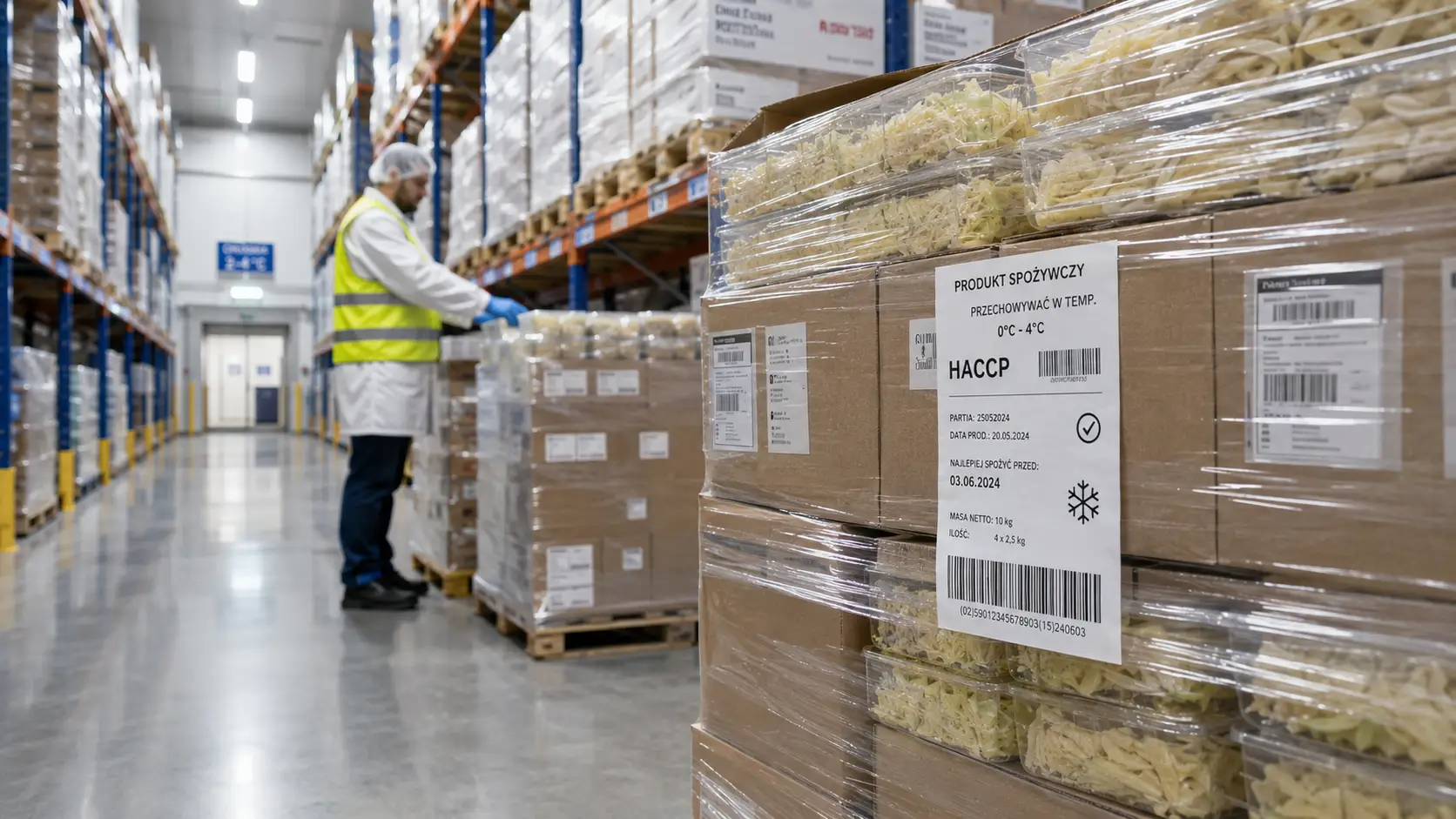

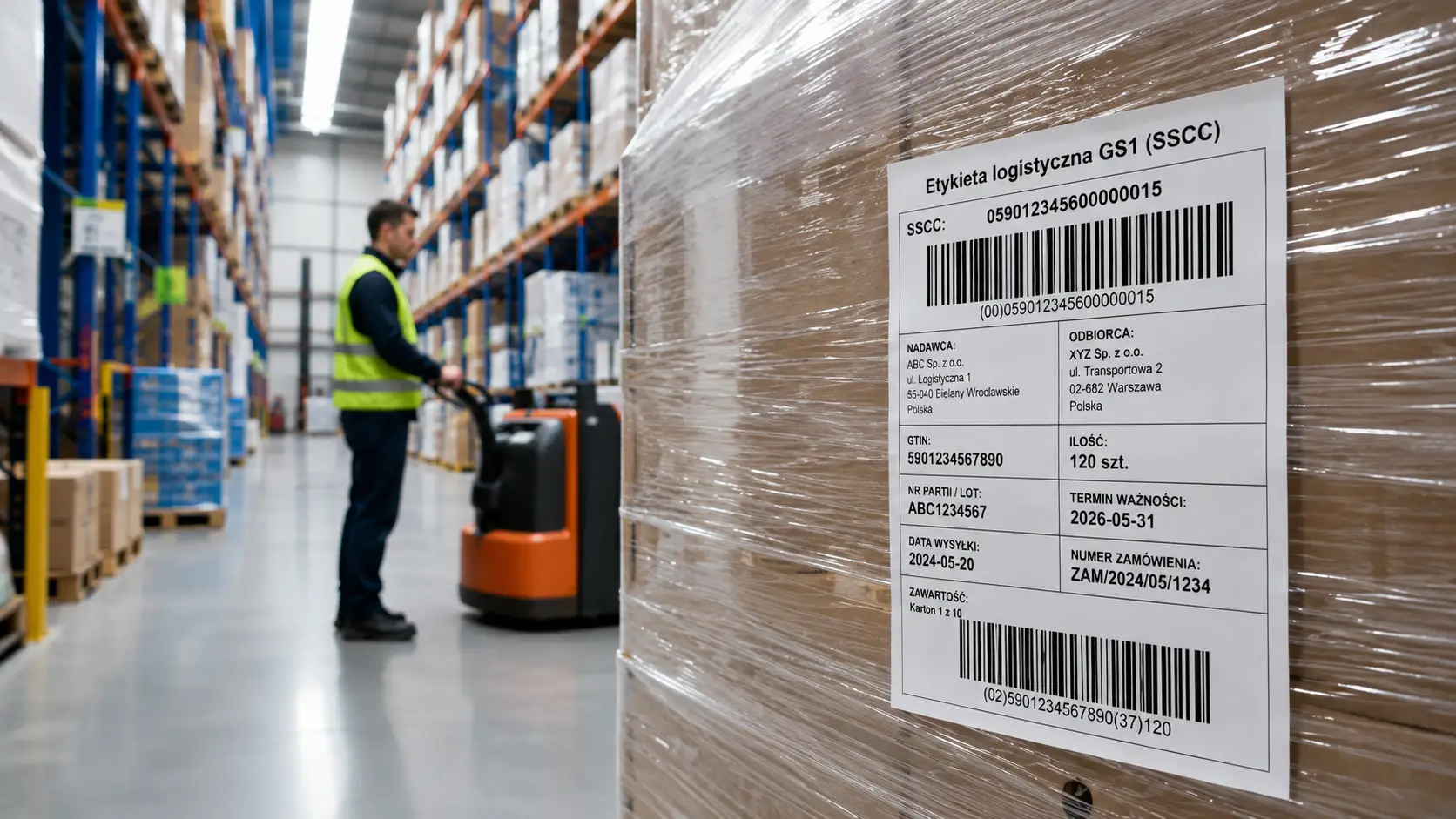
In professional logistics, precise identification of goods is the foundation of your profit. Logistics label GS1 serves as a "passport" for the transport unit, eliminating errors and accelerating warehouse receipts. With MPT Stanro, you can implement standards that optimize your supply chain and facilitate collaboration with global networks. Learn about key marking elements, from the SSCC number to advanced Application Identifiers.
What is the GS1 Logistics Label and why is it crucial for your logistics?
Logistics label GS1 is a universal, global standard for information carriers that allows for the unambiguous identification of logistic units—such as pallets, cartons, or containers. This concept refers to a standardized data format that is understandable by every link in the supply chain, regardless of country or WMS software used. Unlike a typical courier label, which focuses on the address, the GS1 standard uses GS1-128 barcodes and the Application Identifier (AI) system.
For your business, implementing this standard brings a number of tangible operational benefits. Standardization enables seamless collaboration with trading partners and significant optimization of internal costs:
- Full transparency – you track the movement and origin of goods at every stage of transport, which is crucial when handling cross-docking.
- Lightning-fast receipts – data reading automation shortens unloading times and immediately places goods in stock.
- Elimination of errors – standardization minimizes the risk of errors when identifying FMCG products and production batches.
At MPT Stanro, we've been handling thousands of pallets per month for over 30 years, delivering to Europe's largest retail chains. We know that contract logistics leaves no room for guesswork. We apply rigorous standards that guarantee our partners operational security and the highest efficiency of fulfillment processes.
The structure of the label, its graphic layout and technical parameters
Correct logistics label GS1 has a strictly defined layout, most often in A5 format (148 mm x 210 mm). Its structure is divided into three sections, allowing for error-free reading of information by both your employees and automated vision systems.
- Top (Information) Part: Contains text data such as the sender's name and address, company logo, and optional marketing information.
- Middle Section (Interpretation): Here you'll find a textual interpretation of the data encoded below. This information is visually readable, making it easier for warehouse workers to complete orders.
- Bottom (Code) Section: This is the heart of the label, where the GS1-128 barcodes are located. The last line must always contain the SSCC.
The physical placement of the label on the pallet is equally important. At our modern distribution center in Goleniów, we strictly adhere to positioning rules to avoid legibility issues when scanning on automated conveyors:
- Height: 400–800 mm from the ground (for pallets over 1 m high).
- Location: Labels stuck on two adjacent sides of the pallet.
- Margins: Maintain a minimum of 50 mm from the vertical edge of the load.
Always stick labels on two adjacent sides of the pallet, which will allow them to be read regardless of how the load is arranged in your warehouse.
Key data from mandatory SSCC to Application Identifiers (AI)
The key to global consistency is the data encoded in the GS1-128 code. The most important of these is the SSCC (Serial Shipping Container Code), or the serial number of the logistic unit. This concept defines an 18-digit, unique identifier that acts as a license plate for your pallet and is the only mandatory element of the label.
The remaining information is defined by Application Identifiers (AIs). These are 2, 3, or 4-digit numbers enclosed in parentheses that tell the system what type of data immediately follows them.
| IZ code | Field | Description and example of use |
|---|---|---|
| (00) | SSCC | Unique pallet number (required). |
| (01) | GTIN | Global Trade Item Number contained on the unit. |
| (10) | Batch number | Necessary for precise withdrawal of a specific batch of goods. |
| (15) | Best before date | The “best before” date is crucial in the food industry. |
| (17) | Expiration date | The final expiration date. |
| (37) | Quantity | The number of trade units contained inside the package. |
| (3301) | Gross weight | Pallet weight in kilograms (accurate to 2 digits). |
Stanro's expert advice: Incorrectly calculating the checksum digit in the SSCC number is one of the most common reasons for immediate rejection of deliveries by large retail chains like Rossmann. To avoid costly returns and contractual penalties, use proven WMS systems that automate this process and guarantee checksum accuracy.
Digital integration, i.e. the GS1 label and the EDI DESADV message
Physical logistics label This is only half the battle in a modern supply chain. You gain a true operational advantage by combining it with electronic data interchange (EDI), which allows for complete synchronization of the flow of goods and information between partners.
| Area | Traditional processes | EDI and GS1 integration |
|---|---|---|
| Delivery registration | Manual entry of delivery notes | Automatic data download from DESADV |
| Time efficiency | Standard unloading rate | Reduction of admission time by up to 60% |
| Inventory control | Delayed insight into states | Real-time status visibility |
When your partner scans the SSCC number, their system automatically retrieves all the details from the DESADV message: from the exact pallet composition to the expiration dates of fresh products. This paperless model eliminates the need to manually enter delivery notes. At MPT Stanro, we support such innovations through the Stanro24 platform, which allows our partners full operational control and 24/7 visibility into order status.
The Most Common Labeling Mistakes and How to Avoid Them and Save Money
Labeling errors can lead to significant financial losses, including warehouse downtime and late fees. At MPT Stanro, we ensure order fulfillment through rigorous label verification procedures at every stage of the logistics chain.
The following checklist will allow you to verify the correctness of shipment preparation in your warehouse:
- Code readability – check that the thermal transfer printer heads are not worn; the code must have sharp edges.
- Foiling method – make sure the label is not stuck under a thick layer of stretch foil that reflects the scanner light.
- Pallet hygiene – remove all old logistics labels from previous shipments to avoid errors in sorting systems.
- Location – Avoid placing the code on the folds of the cardboard or on the joints of the pallet boards.
- Data consistency – verify that the SSCC number on the printout is identical to the one sent in the EDI message.
The future of standards from 2D codes to RFID technology
Logistics is constantly evolving, and the demands on information flow are constantly growing. Modern technologies allow for the encoding of significantly larger amounts of data, which is crucial in the era of global e-commerce and omnichannel trade:
- 2D codes (GS1 DataMatrix) – ideal for precise marking of groupage logistics in a small space.
- RFID technology – enables contactless reading of entire pallet loads in a fraction of a second without the label being visible.
- Scan4Transport Standard – a new method of digitizing transport data that facilitates the work of carriers.
At MPT Stanro, we constantly monitor these innovations to ensure your company has a technological advantage and is fully prepared for the challenges of modern international trade.
Optimize your logistics with MPT Stanro – Check out our services labeling of goods
Frequently asked questions about the GS1 logistics label
Yes, the Serial Shipping Container Code (SSCC) is the only mandatory element of the GS1 logistics label. It serves as a unique identifier that allows you to track your shipment anywhere in the world. Other data, such as the expiration date and batch number, are optional, although typically required by retail chains and quality assurance systems.
For pallets over 1 metre high, the label should be placed between 400 and 800 mm from the ground and at least 50 mm from the vertical edge. For shorter units, maintain a minimum distance of 32 mm from the bottom edge. Remember to always place two labels on adjacent sides of the pallet to ensure they are easily read in your warehouse and at customer distribution centres.
Logistics label GS1 is based on the global GS1-128 standard and includes universal Application Identifiers understood by Warehouse Management Systems (WMSs) worldwide. A courier label is typically specific to a single carrier and focuses on address data and an internal tracking number. By using the GS1 standard, you achieve full interoperability in the international supply chain.
Integrating the label with electronic data interchange (EDI) allows for automatic generation of a DESADV message. This ensures your recipient knows the exact contents of the pallet before it reaches the unloading ramp. This reduces goods receipt time by up to 60%, directly saving employee time and improving warehouse goods turnover.